Connecting your Ovation guitar to an amplifier seems simple, but the right cable can make a world of difference. It’s the essential link that carries your unique sound from the instrument to the speaker. Choosing the best ovation to amp cable ensures that the rich, distinct tone your guitar is known for is heard loud and clear, without interference or signal loss. This guide will walk you through everything you need to know, from understanding the basics to selecting the perfect cable for your setup.
We will explore the types of cables available, what makes a quality cable, and how to care for it to ensure it lasts for years of playing. Whether you are a beginner just starting or a seasoned musician looking to refine your sound, understanding your gear is key. Let’s plug in and discover how to get the best possible sound from your Ovation guitar.
Key Takeaways
- A standard 1/4-inch TS instrument cable is the correct choice for connecting an Ovation guitar to an amp.
- Cable quality matters; factors like shielding, conductor material, and connector quality directly impact your sound.
- Proper cable length is crucial. A cable that is too long can degrade your signal, while one that is too short can be impractical.
- Regular maintenance, including proper coiling and cleaning, can significantly extend the life of your cable.
- Understanding the difference between balanced (TRS) and unbalanced (TS) cables will help you make the right choice for your setup.
Understanding the Ovation Guitar Output
Ovation guitars are famous for their unique roundback design and their pioneering use of onboard electronics. Most Ovation acoustic-electric models come equipped with a standard 1/4-inch output jack. This jack is designed for an unbalanced signal, which is typical for electric and acoustic-electric guitars. This means you need a specific type of cable to correctly transfer the signal from your guitar’s pickup and preamp system to your amplifier without losing tonal quality.
The electronics inside an Ovation, often featuring a sophisticated preamp with EQ controls, are designed to capture the nuanced sound of the instrument. The output jack is the final point in this internal chain. Using the wrong type of cable can introduce noise, hum, or a weak signal, which undermines the quality of the guitar’s built-in system. Therefore, selecting the correct ovation to amp cable is the first step toward achieving a professional and clean sound.
What is a 1/4-Inch TS Cable?
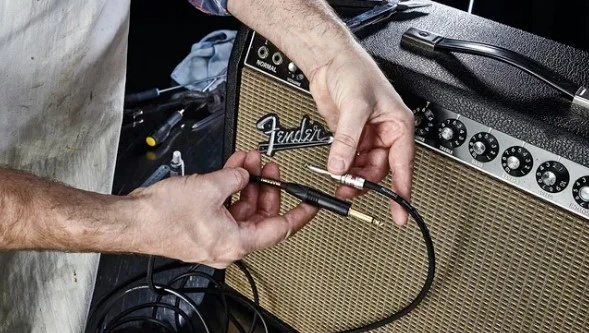
The cable you need is a 1/4-inch TS (Tip-Sleeve) instrument cable. You can easily identify it by looking at the plug. It will have two metal sections on the connector: a “tip” and a “sleeve,” separated by a single black ring. The tip carries the audio signal, while the sleeve serves as the ground, which helps to shield the main signal from interference. This is the industry standard for connecting guitars, basses, and other instruments with mono, unbalanced outputs to amplifiers or audio interfaces. This simple design is effective for the relatively short distances typically found on stage or in a studio.
The Importance of a High-Quality Cable
Not all instrument cables are created equal. While it might be tempting to grab the cheapest option available, a low-quality cable can be the weak link in your signal chain. Investing in a good ovation to amp cable is an investment in your tone. A superior cable will preserve the clarity, richness, and dynamic range of your Ovation guitar, while a poor one can make your sound thin, noisy, and lifeless.
Think of your signal path as a chain. It starts with your fingers on the strings, goes through the guitar’s pickups and preamp, travels down the cable, and ends at the amplifier’s speaker. If any part of that chain is weak, the final result will suffer. A high-quality cable ensures that the signal created by your guitar arrives at the amp as purely as possible.
Shielding: Your Defense Against Noise
One of the most critical components of a quality instrument cable is its shielding. Shielding is a conductive layer, typically made of braided copper or foil, that surrounds the central conductor wire. Its job is to block electromagnetic interference (EMI) and radio frequency interference (RFI) from corrupting your audio signal. This interference comes from power lines, fluorescent lights, cell phones, and other electronic devices. Inadequate shielding will result in an audible hum, buzz, or static, especially at higher volumes. A well-shielded ovation to amp cable is essential for a clean, professional sound, particularly in live performance settings or recording studios where many sources of interference are present.
Conductor Material and Gauge
The core of the cable, the conductor, is what carries your audio signal. Most instrument cables use copper conductors. Oxygen-free copper (OFC) is often preferred because it offers better conductivity and less signal degradation over time. The thickness of this conductor, known as its gauge, also plays a role. A thicker wire (lower gauge number) has less resistance, which can help preserve high-frequency details, especially in longer cables. While subtle, these details contribute to a more vibrant and present tone, ensuring your Ovation sounds its best.
Choosing the Right Cable Length
Cable length is a practical and technical consideration. You need a cable long enough to move around comfortably, but an excessively long cable can negatively affect your tone.
- For Home or Studio Use: A 10 to 15-foot cable is often perfect. It provides enough length to move between your chair and your amp without creating a large, tangled mess.
- For Live Performances: A 20 to 25-foot cable is a common choice for stage use. This gives you the freedom to move around the stage without being tethered too closely to your amplifier.
It’s important to know that the longer the cable, the more capacitance it has. Capacitance is an electrical property that can filter out high frequencies, making your tone sound darker or duller. This is why it’s best to use the shortest cable that meets your needs. Using a quality ovation to amp cable with low capacitance can help minimize this effect, even at longer lengths.
Straight vs. Angled Plugs
Instrument cables come with two main types of plugs: straight and angled (or right-angle). The choice between them often comes down to personal preference and the location of your guitar’s output jack.
When to Use a Straight Plug
A straight plug is the standard and works well for most situations. If your Ovation has a side-mounted output jack, a straight plug is typically the most convenient and secure option. It’s easy to plug in and out and provides a solid connection.
The Advantage of an Angled Plug
An angled plug can be beneficial if your guitar has a top-mounted jack, like some Fender Stratocasters, or if you want a lower-profile connection. For some players, an angled plug feels more secure and is less likely to be accidentally unplugged or damaged if it gets bumped. It can also reduce strain on the output jack itself. For connecting to your amplifier, either plug type works fine. Some players prefer to use a cable with one straight and one angled plug for maximum versatility.
Cable Comparison: Budget vs. Premium
Feature | Budget Cable | Premium Cable |
|---|---|---|
Conductor | Standard Copper | Oxygen-Free Copper (OFC) |
Shielding | Basic Foil or Serve Shield | High-Density Braided or Multiple Shields |
Connectors | Non-branded, Plated | Gold-plated, Neutrik or similar |
Jacket | Thin PVC | Durable Woven Fabric or Thick PVC |
Sound Quality | Prone to noise, potential high-end loss | Clear, quiet signal, full frequency response |
Durability | Lower, prone to failure at solder points | High, built for stage and studio use |
This table shows that while a budget ovation to amp cable works, a premium one offers significant advantages in sound quality and durability.
Cable Maintenance and Care
A good instrument cable can last for many years with proper care. Following a few simple practices can prevent common issues like crackling sounds, signal dropouts, and complete failure. Proper care protects your investment and ensures your gear is reliable when you need it NCR Magazine.
The Right Way to Coil Your Cable
Never wrap your cable tightly around your elbow and hand. This common mistake puts stress on the internal wires and shielding, leading to breaks over time. The best method is the “over-under” or “roadie wrap” technique. This involves alternating the direction of each coil, which prevents twisting and kinking and allows the cable to lay flat when uncoiled. A quick search online for “over-under cable wrapping” will provide many helpful video tutorials. This small change in habit can dramatically increase the lifespan of your ovation to amp cable.
Cleaning and Inspection
Keep the plugs of your cable clean. A pencil eraser can be used to gently remove oxidation from the metal contacts. Periodically inspect the cable for any visible damage, such as cracks in the jacket or loose connectors. If you start to hear crackling or popping sounds when you move the cable, it’s a sign that the internal connections may be failing. At this point, it’s often best to repair or replace the cable to avoid it failing completely during a performance.
Should I Consider a Wireless System?
For ultimate freedom on stage, a wireless guitar system is an alternative to a traditional ovation to amp cable. Modern wireless systems offer excellent sound quality with very low latency, making them a viable option for many musicians. A basic system consists of a transmitter that plugs into your guitar and a receiver that connects to your amplifier.
However, there are trade-offs. Wireless systems are more expensive than cables and require batteries or charging. They can also be susceptible to interference, although higher-end digital systems are very reliable. For most players, a high-quality cable remains the simplest, most reliable, and most cost-effective solution for connecting their Ovation guitar to an amp.
Conclusion
Your ovation to amp cable is more than just an accessory; it’s a critical component for achieving great tone. By choosing a high-quality 1/4-inch TS instrument cable with excellent shielding and durable connectors, you ensure that the beautiful sound of your Ovation guitar reaches your amplifier with clarity and fidelity. Consider the right length for your needs and decide whether straight or angled plugs work best for your setup. With proper care and maintenance, a good cable will be a reliable partner in your musical journey for years to come. Don’t let a subpar cable be the weak link that holds back your sound.
Frequently Asked Questions (FAQ)
Q1: Can I use a speaker cable to connect my Ovation guitar to my amp?
No, you should never use a speaker cable for this purpose. Speaker cables are unshielded and designed to carry a high-power signal. Using one for your guitar will result in a very noisy and weak signal. Always use a shielded instrument cable.
Q2: What is the difference between a TS and a TRS cable?
A TS (Tip-Sleeve) cable is for unbalanced, mono signals, which is what your Ovation guitar outputs. A TRS (Tip-Ring-Sleeve) cable has an extra conductor and can carry a balanced mono signal or a stereo signal. Using a TRS cable where a TS cable is needed can sometimes cause phase or connection issues. Stick with a TS cable for your guitar.
Q3: Does a gold-plated connector really make a difference?
Gold is an excellent conductor and is highly resistant to corrosion and oxidation. While the sonic difference may be subtle to some ears, the main benefit of gold-plated connectors is their long-term reliability. They ensure a clean, solid connection for a longer period compared to nickel-plated connectors, which can tarnish over time.
Q4: How much should I spend on an ovation to amp cable?
You don’t need to buy the most expensive cable on the market, but you should avoid the cheapest ones. A good quality, durable cable from a reputable brand can be found in the $20-$50 range. This is a worthwhile investment to protect your tone and ensure reliability. Many great options are available from music retailers like Sweetwater.