





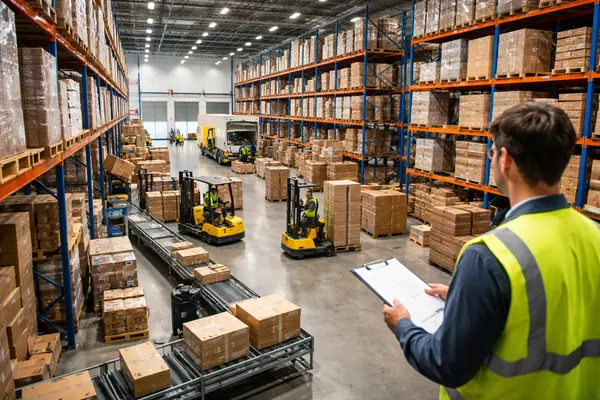
Have you ever wondered how your online order arrives at your doorstep in just a few days? Or how grocery store shelves remain stocked with fresh produce from around the world? The answer lies in a complex and fascinating field managed by professionals known as logisths.
- What Exactly Is a Logisth?
- The Core Responsibilities of Logisths
- Key Skills Every Logisth Needs
- Educational Pathways and Certifications for Logisths
- The Role of Technology in Modern Logisths’ Work
- Comparing In-House vs. Third-Party Logisths (3PLs)
- The Future of Logisths: Trends and Opportunities
- Career Outlook for Logisths in the United States
- Key Takeaways: Why Logisths Matter
- Conclusion: Your Path as a Logisth Starts Here
- Frequently Asked Questions (FAQ) About Logisths
In the United States, a logisth is commonly called a “logistician.” Throughout this guide, we’ll use “logisth” to highlight the unique role and support SEO optimization, but remember: both terms refer to the same essential profession.
Logisths are the masterminds behind the movement of goods, information, and resources from origin to destination. They work behind the scenes to keep the global supply chain running smoothly and efficiently. Without logisths, the vast network of modern commerce would quickly grind to a halt.
In this article, you’ll gain clear insights into what a logisth does, their key responsibilities, necessary skills, and career opportunities. Whether you’re a business owner, a student considering a career, or just curious about global trade, learning about logisths will give you a fresh perspective on the world’s economic backbone.
What Exactly Is a Logisth?
A logisth (also known as a logistician) is a professional who manages logistics and supply chain operations. Their primary mission is to organize and coordinate a product’s journey from acquisition and distribution all the way to final delivery.
- Logisths are strategic planners overseeing every stage to maximize efficiency and cost-effectiveness.
- Think of them as the choreographers behind the dance involving suppliers, manufacturers, transporters, and retailers.
Their work is far more than moving boxes:
- It includes inventory management, warehousing, procurement, and transportation logistics.
- Successful logisths use advanced software and data analysis to track goods, forecast demand, and manage partners.
By mastering these tasks, logisths ensure products are delivered to consumers on time while allowing businesses to operate profitably and sustainably.
The Core Responsibilities of Logisths
A logisth’s daily work covers a range of important responsibilities. Here are the crucial ones:
- Order Management: Coordinate the full lifecycle of orders, from receipt to final delivery.
- Inventory Control: Maintain the right level of stock to meet customer demand without over-investment.
- Process Compliance: Ensure all logistics activities follow industry laws and company policies.
- Transportation Coordination: Organize shipping by land, air, or sea.
- Cost Optimization: Negotiate better shipping rates, reduce waste, and improve efficiencies.
- Efficiency Improvements: Continuously seek ways to streamline operations and respond to market changes.
Through these responsibilities, logisths keep supply chains flowing and businesses agile.
Key Skills Every Logisth Needs
To succeed as a logisth, both technical know-how and soft skills are crucial. Key skills include:
Technical Skills
- Data analysis and logistics software proficiency
- Deep knowledge of supply chain management (procurement, warehousing, transportation)
- Understanding of global trade rules and industry regulations
- Capability to use forecasting models for inventory and demand planning
Soft Skills
- Strong problem-solving to handle unexpected issues (like shipping delays)
- Clear communication and negotiation with suppliers and partners
- Leadership and teamwork abilities for managing teams and collaboration
- Adaptability and strategic thinking for seeing both details and the big picture
Mastering these skills empowers logisths to solve problems and adapt to a fast-moving industry.
Educational Pathways and Certifications for Logisths
Interested in becoming a logisth? Here’s how to get started:
- Education: Most positions require a bachelor’s degree in supply chain management, logistics, business administration, or related fields.
- Certifications: Credentials can set you apart by demonstrating expertise and commitment. Top certifications include:
- Certified in Logistics, Transportation and Distribution (CLTD) by ASCM
- Certified Supply Chain Professional (CSCP) by ASCM
- Certified Professional Logistician (CPL)
These programs prepare candidates for real-world logistics challenges and ensure they stay current with best practices.
The Role of Technology in Modern Logisths’ Work
Technology is transforming the daily work of logisths. They rely on a range of advanced tools:
- Enterprise Resource Planning (ERP): Integrates business processes for smooth workflow.
- Warehouse Management Systems (WMS): Optimizes storage and order fulfillment.
- Transportation Management Systems (TMS): Plans efficient shipping routes and tracks shipments.
Emerging tech like IoT sensors, AI-driven demand forecasting, and real-time tracking allow logisths to:
- Monitor goods and environmental conditions (e.g., temperature for perishables)
- Predict and prevent supply chain disruptions
- Make data-driven decisions to boost efficiency
For additional trends in logistics technology, check out resources like the U.S. Department of Transportation and ASCM.
Comparing In-House vs. Third-Party Logisths (3PLs)
Choosing between in-house logistics and outsourcing to Third-Party Logistics (3PL) providers is critical for any business:
Feature | In-House Logisths | Third-Party Logisths (3PL) |
|---|---|---|
Control | High level of direct control over operations | Less control, reliant on 3PL partners |
Cost | High upfront investment (infrastructure, staff) | Lower upfront, pay-as-you-go structure |
Expertise | Built internally and tailored to specific needs | Access to expert networks and latest tech |
Scalability | Harder and slower to adapt to new demand | Flexible and rapidly scalable |
Focus | May distract from core business | Lets company focus on main competencies |
Whether you choose in-house logisths or 3PL partners depends on your company’s scale, needs, and goals.
The Future of Logisths: Trends and Opportunities
The world of logistics is always evolving. Logisths are rapidly adapting to:
- Autonomous vehicles and drones for faster delivery
- Blockchain for secure, transparent tracking
- Ecommerce growth driving demand for flexible, rapid fulfillment
- Emphasis on sustainability (lowering emissions, eco-friendly packaging, recycling systems)
As companies and consumers prioritize eco-friendly practices, logisths are central to building “green” supply chains.
For current trends and inspiration in logistics, visit NCR Magazine.
Career Outlook for Logisths in the United States
According to the U.S. Bureau of Labor Statistics, demand for logisths is growing much faster than the average for all careers.
Logisths work across:
- Manufacturing
- Retail and wholesale
- Transportation companies
- Government agencies
- Third-party logistics providers
With experience, logisths can move into high-level roles such as Logistics Director or VP of Operations. The path also offers strong job security and an impactful role in global commerce.
Key Takeaways: Why Logisths Matter
- Logisths are logistics professionals—experts in orchestrating goods, data, and resources.
- Their work ensures efficiency, cost savings, and timely delivery across industries.
- They use technology, data, and problem-solving to master the supply chain.
- The future of logistics holds opportunities for tech-savvy, adaptable logisths as the field evolves.
Conclusion: Your Path as a Logisth Starts Here
The work of a logisth sustains the modern world—connecting businesses, shaping markets, and delivering essentials right to your door.
If you’re eager to make an impact, consider a career as a logisth. Start with education, pursue industry-recognized certifications, and explore internships to gain experience. With dedication and a passion for innovation, you can thrive in this exciting and essential profession.
Ready to begin your journey?
Explore supply chain programs, enroll in certification courses, or connect with professionals to see if logistics is your calling!
Frequently Asked Questions (FAQ) About Logisths
Q1: What is the difference between a logistician and a logisth?
A1: Both terms mean the same role—a professional specializing in logistics and supply chain management. “Logistician” is the standard term in the U.S., but “logisth” is used here for unique identification and SEO.
Q2: Is logistics a stressful job?
A2: Logisths often handle fast-paced challenges and supply chain disruptions, which can be stressful. However, many find problem-solving and improving processes very rewarding.
Q3: Can I become a logisth without a degree?
A3: While many roles prefer a bachelor’s degree, you can start with an associate’s degree or relevant experience. Certifications further boost your prospects.
Q4: What software tools do logisths use?
A4: Logisths commonly use ERP, WMS, and TMS systems—with newer tools integrating IoT, AI, and real-time data analytics for smarter supply chain management.
Q5: Is logistics a good career for beginners?
A5: Yes! Logistics offers clear career paths, growth opportunities, and a variety of entry-level roles—making it great for those starting out or changing careers.